Free shipping
| Free USA shipping on all orders over $300.
$40.00
19 in stock
Research and Clinical Studies
Kisspeptin-10 and Reproduction
As part of one 2017 study,(10) a literature review was conducted for all articles published from 1999 to 2016. Upon review of the articles, it was suggested that experimental data may support the hypothesis that the Kisspeptin-10 system (including the KISS1 gene and its products, GPR54 receptors) may possibly regulate the release of gonadotropin hormones.
Furthermore, certain studies were conducted in experimental animal models with similar characteristics as hypogonadotropic hypogonadism (HH) and polycystic ovarian syndrome (PCOS). These studies suggested that reproductive disorders such as HH and PCOS may occur due to abnormalities in the KISS1 and GPR54 system. The outcome of this literature review suggested that Kisspeptin-10 may be a neuropeptide regulator of GnRH release.
Kisspeptin-10 and Delayed Hormonal Development
The main goal of this study(13) was to evaluate the potential of Kisspeptin-10 peptide in research models of stunted development. Researchers hypothesized that the peptide might stimulate the gonadal hormonal release and regulate the reproductive system in the experimental models. The study randomly introduced either Kisspeptin-10 or gonadotropin-releasing hormone (GnRH). The levels of luteinizing hormone (LH) were monitored overnight. All research models were then exposed to GnRH for 6 days, then evaluated for LH levels. A total 47% of the experimental group exhibited positive impacts as a possible result of Kisspeptin-10 presence, with increased levels of LH hormone. An additional 6% of the group exhibited an intermediate response, and the remaining 47% exhibited no response as a result of peptide exposure.
Kisspeptin-10 and Emotional Modulation
The main purpose of this study(14) was to understand the potential of Kisspeptin-10 on limbic brain activity. Following Kisspeptin-10 exposure in the research models, results were monitored via neuroimaging and psychometric analysis. The data from the study suggested that the peptide appeared to have led to some enhanced limbic brain activity. The models appeared to exhibit an increased response towards sexual and bonding stimuli.
Kisspeptin-10 and Reproductive Hormone Release
The key objective of this study(15) was to establish the potential of Kisspeptin-10 on reproductive hormone release. Kisspeptin-10 was presented to both male and female experimental models. Results in the males indicated that the levels of FSH and LH were increased following peptide exposure. In the females, no alterations were reported in the levels of LH and FSH during the menstrual cycle. However, during the preovulatory phase, the levels of FSH and LH were reportedly elevated.
Kisspeptin-10 and Food Intake
Kisspeptin-10 is considered to be widely distributed in brain sites, including the hippocampus, cerebellum, posterior hypothalamus, and septum. Owing to its apparently vast distribution and presence in the food intake regulating nuclei, such as Arc, found in the hypothalamus, this study(11) was conducted to examine the potential impact of Kisspeptin-10 on food intake. This experiment was conducted on adult male mice aged between 6 and 8 weeks, caged under normal temperatures and conditions. These mice were subjected to a standard rodent diet and tap water. Overnight fasted mice and the experimentally fed mice were presented with different concentrations of Kisspeptin-10 or placebo. Results suggested that the peptide in the overnight fasted mice may have decreased food intake during the first 3-to-12-hour period. The food intake then reportedly increased during the 12-to-16-hour period, resulting in a similar food intake compared to the placebo group. This result suggested that the peptide led to a decrease in meal frequency and total meal time and increased intervals between meals. However, meal size and eating rate were almost similar to that of the placebo mice.
To delve deeper into the subject, researchers have undertaken studies to investigate the potential actions of Kisspeptin-10 on food intake by examining the apparent influence of the peptide on appetite regulation in the central nervous system. The scientists suggested that the peptide may have some influence on the expression of genes related to neuropeptide Y (NPY) and brain-derived neurotrophic factor (BDNF). It has also been posited to have a potential impact on the concentrations of dopamine, norepinephrine, serotonin (also known as 5-hydroxytryptamine or 5-HT), dihydroxyphenylacetic acid, and 5-hydroxyindoleacetic acid within hypothalamic cells (specifically Hypo-E22 cells). Findings indicate that Hypo-E22 cells might be receptive to Kisspeptin-10, which may potentially elevate NPY gene expression. Conversely, it appeared to suppress the expression of BDNF. Furthermore, Kisspeptin-10 may have reduced serotonin and dopamine concentrations, though norepinephrine levels seemed to remain stable. This reduction in dopamine and serotonin was reflected by an increase in the ratios of their metabolites, dihydroxyphenylacetic acid to dopamine and 5-hydroxyindoleacetic acid to serotonin, respectively, following exposition to the peptide. The observed enhancement in NPY gene expression, alongside the diminution of BDNF expression and serotonin activity, may suggest the hunger-influencing potential of Kisspeptin-10.(12)
Studies in Impaired Kisspeptin-10 Systems
As part of this study,(13) the energetic and metabolic potential of Kisspeptin-10 was compared between control mice and mice with impaired Kisspeptin systems. Results suggested that female mice with impaired Kisspeptin systems exhibited dramatic increases in body weight and significantly impaired glucose tolerance levels. While the peptide exposed and impaired female mice ate less than the control female mice, they were more obese, with reduced locomotor activity and respiratory rate. No reported difference was found between control male mice and male mice with impaired Kisspeptin systems. Both exhibited normal body weight and glucose levels.
Kisspeptin-10 and Neuroprotection
The accumulation of amyloid-beta (Aβ) and alpha-synuclein (α-syn) within cholinergic neurons is believed to damage and potentially cause dysfunction within important central nervous system structures. However, it has been proposed that Kisspeptin-10 may attach to Aβ on the outside of cells, which may, in turn, possibly reduce the harmful actions of Aβ.(16) Studies have suggested that Kisspeptin-10 peptides may counteract the damaging actions of Aβ, prion protein (PrP), and Islet Amyloid Polypeptide (IAPP) without being hindered by the antagonists of the kisspeptin receptor (GPR-54) or the neuropeptide FF (NPFF) receptor. Given the resemblance between the non-amyloid-β component (NAC) of α-syn and the C-terminus of Aβ, it has been speculated that Kisspeptin-10 might also lessen the toxicity caused by α-syn in cholinergic neurons.(17) Research involving cholinergic cells has indicated that while high concentrations of Kisspeptin-10 may increase toxicity, lower concentrations may potentially decrease the toxicity induced by both the wild-type and the E46K mutant forms of α-syn. Computational studies have supported these observations by suggesting a potentially actionable interaction between Kisspeptin-10 and the C-terminal residues of α-syn. The molecular dynamics simulations indicated that the complexes formed between Kisspeptin-10 and α-syn appeared to have demonstrated good stability.
Researchers have also delved into investigating whether the activation of GPR54 (the receptor for the Kisspeptin gene) is crucial for the potential of Kisspeptin-10 to bind to the C-terminal pockets of α-syn. In one study, ChAT-positive SH-SY5Y neurons were genetically modified to produce either the wild-type or the E46K mutant version of α-syn, and the actions of Kisspeptin-10 on the neuronal damage caused by α-syn were assessed through flow cytometry and immunocytochemistry methods.(18) Results suggested that Kisspeptin-10 may have lessened both apoptosis and mitochondrial damage in cholinergic neurons affected by either form of α-syn. Notably, the seeming protective action of Kisspeptin-10 did not appear to be impacted when introduced alongside a GPR54 antagonist, kisspeptin-234 (KP-234), implying that the activation of GPR54 may not be necessary for the actions of Kisspeptin-10. Additionally, it was observed that Kisspeptin-10 may have reduced the presence of α-syn and choline acetyltransferase (ChAT) in neurons that overexpressed the wild-type and E46K mutant α-syn, further highlighting its potential neuroprotective capacity.
Kisspeptin-10 peptide is available for research and laboratory purposes only. Please review and adhere to our Terms and Conditions before ordering.
References:
Hypogonadotropic hypogonadism. US National Library of Medicine. https://medlineplus.gov/ency/article/000390.htm
KISS1 KiSS-1 metastasis suppressor [Homo sapiens (humans)]. https://www.ncbi.nlm.nih.gov/gene/3814
Hussain, Mehboob A et al. “There is Kisspeptin – And Then There is Kisspeptin.” Trends in endocrinology and metabolism: TEM vol. 26,10 (2015): 564-572. https://www.ncbi.nlm.nih.gov/pmc/articles/PMC4587393/
Pasquier, J., Kamech, N., Lafont, A., Vaudry, H., Rousseau, K., & Dufour, S. (2014). MOLECULAR EVOLUTION OF GPCRS: Kisspeptin/kisspeptin receptors, Journal of Molecular Endocrinology, 52(3), T101-T117. https://jme.bioscientifica.com/view/journals/jme/52/3/T101.xml
Messager, S., Chatzidaki, E. E., Ma, D., Hendrick, A. G., Zahn, D., Dixon, J., Thresher, R. R., Malinge, I., Lomet, D., Carlton, M. B., Colledge, W. H., Caraty, A., & Aparicio, S. A. (2005). Kisspeptin directly stimulates gonadotropin-releasing hormone release via G protein-coupled receptor 54. Proceedings of the National Academy of Sciences of the United States of America, 102(5), 1761–1766. https://www.ncbi.nlm.nih.gov/pmc/articles/PMC545088/
Mead, E. J., Maguire, J. J., Kuc, R. E., & Davenport, A. P. (2007). Kisspeptins: a multifunctional peptide system with a role in reproduction, cancer and the cardiovascular system. British journal of pharmacology, 151(8), 1143–1153. https://www.ncbi.nlm.nih.gov/pmc/articles/PMC2189831/
Rønnekleiv, O. K., & Kelly, M. J. (2013). Kisspeptin excitation of GnRH neurons. Advances in experimental medicine and biology, 784, 113–131. https://www.ncbi.nlm.nih.gov/pmc/articles/PMC4019505/
Prague JK, Dhillo WS. Potential Clinical Use of Kisspeptin. Neuroendocrinology. 2015;102(3):238-45. doi: 10.1159/000439133. Epub 2015 Aug 7. https://pubmed.ncbi.nlm.nih.gov/26277870/
Tng E. L. (2015). Kisspeptin signalling and its roles in humans. Singapore medical journal, 56(12), 649–656. https://www.ncbi.nlm.nih.gov/pmc/articles/PMC4678402/
Zeydabadi Nejad, S., Ramezani Tehrani, F., & Zadeh-Vakili, A. (2017). The Role of Kisspeptin in Female Reproduction. International journal of endocrinology and metabolism, 15(3), e44337. https://www.ncbi.nlm.nih.gov/pmc/articles/PMC5702467/
Stengel, A., Wang, L., Goebel-Stengel, M., & Taché, Y. (2011). Centrally injected kisspeptin reduces food intake by increasing meal intervals in mice. Neuroreport, 22(5), 253–257. https://www.ncbi.nlm.nih.gov/pmc/articles/PMC3063509/
Orlando G, Leone S, Ferrante C, Chiavaroli A, Mollica A, Stefanucci A, Macedonio G, Dimmito MP, Leporini L, Menghini L, Brunetti L, Recinella L. Effects of Kisspeptin-10 on Hypothalamic Neuropeptides and Neurotransmitters Involved in Appetite Control. Molecules. 2018 Nov 24;23(12):3071. doi: 10.3390/molecules23123071. PMID: 30477219; PMCID: PMC6321454.
Kristen P. Tolson et.al, Impaired kisspeptin signaling decreases metabolism and promotes glucose intolerance and obesity. The Journal of Clinical Investigation. Published June 17, 2014. https://www.jci.org/articles/view/71075
Chan, Y. M., Lippincott, M. F., Kusa, T. O., & Seminara, S. B. (2018). Divergent responses to kisspeptin in children with delayed puberty. JCI insight, 3(8), e99109. https://www.ncbi.nlm.nih.gov/pmc/articles/PMC5931121/
Comninos, A. N., Wall, M. B., Demetriou, L., Shah, A. J., Clarke, S. A., Narayanaswamy, S., Nesbitt, A., Izzi-Engbeaya, C., Prague, J. K., Abbara, A., Ratnasabapathy, R., Salem, V., Nijher, G. M., Jayasena, C. N., Tanner, M., Bassett, P., Mehta, A., Rabiner, E. A., Hönigsperger, C., Silva, M. R., Dhillo, W. S. (2017). Kisspeptin modulates sexual and emotional brain processing in humans. The Journal of clinical investigation, 127(2), 709–719. https://www.ncbi.nlm.nih.gov/pmc/articles/PMC5272173/
Milton NG, Chilumuri A, Rocha-Ferreira E, Nercessian AN, Ashioti M. Kisspeptin prevention of amyloid-β peptide neurotoxicity in vitro. ACS Chem Neurosci. 2012 Sep 19;3(9):706-19. doi: 10.1021/cn300045d. Epub 2012 May 30. PMID: 23019497; PMCID: PMC3447396.
Simon, C., Soga, T., Ahemad, N., Bhuvanendran, S., & Parhar, I. (2022). Kisspeptin-10 Rescues Cholinergic Differentiated SHSY-5Y Cells from α-Synuclein-Induced Toxicity In Vitro. International journal of molecular sciences, 23(9), 5193. https://doi.org/10.3390/ijms23095193
Simon, C., Soga, T., & Parhar, I. (2023). Kisspeptin-10 Mitigates α-Synuclein-Mediated Mitochondrial Apoptosis in SH-SY5Y-Derived Neurons via a Kisspeptin Receptor-Independent Manner. International journal of molecular sciences, 24(7), 6056. https://doi.org/10.3390/ijms24076056
SKU
KS10
Category default
Sharing is Caring :
>>> Compound Dossier
Technical Specifications
Product Data
CAS Number
374675-21-5
Molecular Wt.
1302.6 g/mol
Formula
C63H83N17O14
Purity (HPLC)
≥ 99%
Appearance
White lyophilized powder
Quantity
10MG
Description & Application
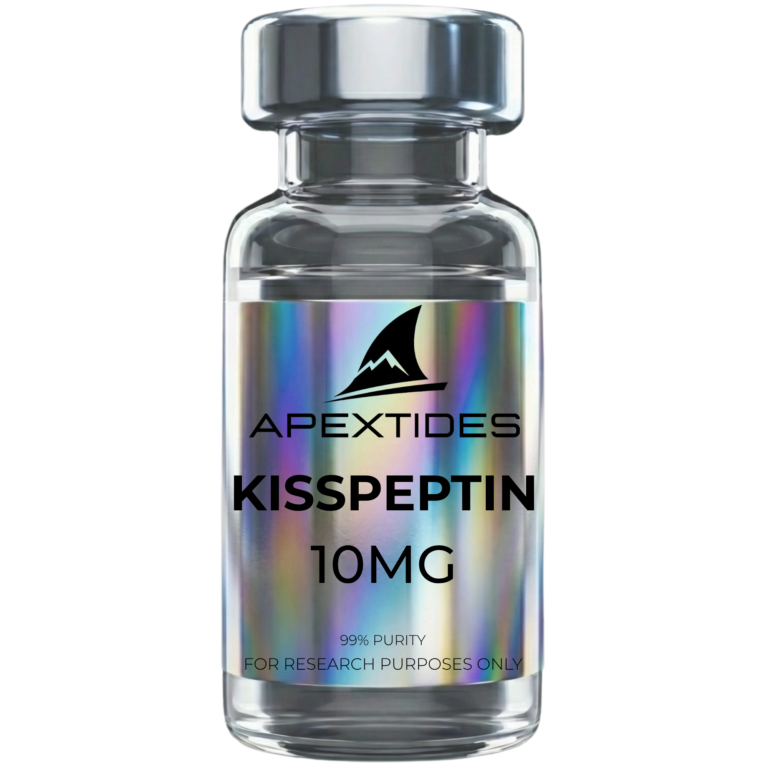
Kisspeptin-10 is a decapeptide fragment of the KISS1 gene product and a potent endogenous agonist of the GPR54 (KISS1R) receptor, functioning as a critical upstream regulator of the hypothalamic-pituitary-gonadal (HPG) axis. Via GPR54 activation, Kisspeptin-10 stimulates pulsatile GnRH release from hypothalamic neurons, which in turn drives downstream secretion of LH and FSH from the anterior pituitary — positioning it as a key research tool for neuroendocrine reproductive studies. Beyond the HPG axis, preclinical research has also implicated Kisspeptin-10 in limbic emotional processing, appetite regulation via NPY/BDNF modulation, and neuroprotection against amyloid-beta and alpha-synuclein toxicity in cholinergic neuron models.
Handling & Storage Protocols
Solubility
Soluble in bacteriostatic water or appropriate solvent.
Temperature
Store refrigerated upon receipt. Long-term: -20°C.
Preparation
Reconstitute strictly under sterile lab conditions.
Integrity
Avoid repeated freeze-thaw cycles. Stable when stored correctly.
Related Products
$40.00
9 in stock
$30.00
Out of stock
$175.00
20 in stock
$80.00
29 in stock